Sound as Medicine: Inside the Grassroots Venues Turning Live Music Into a Lifeline
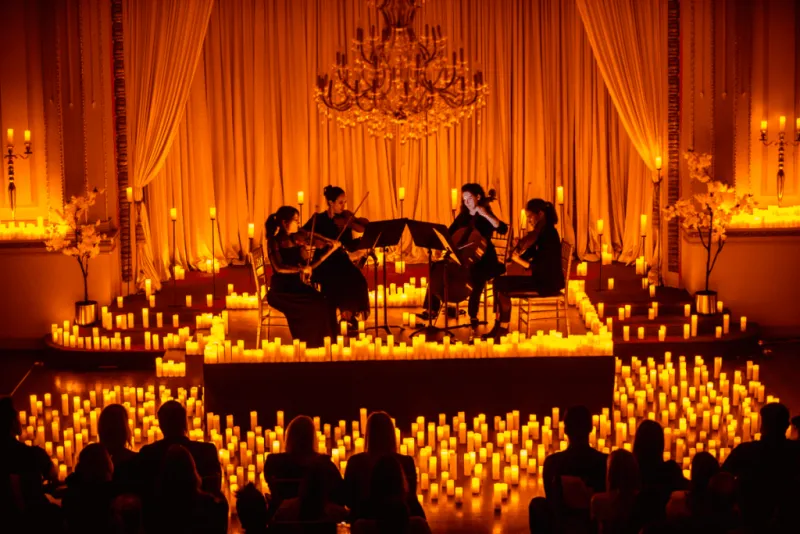
Photo: intimate underground music venue candlelight audience listening, via offloadmedia.feverup.com
There's a basement in East Nashville that doesn't have a sign out front. You find it through a group chat, or because a friend texted you at 10pm on a Thursday saying you need to come to this. Inside, maybe forty people are sitting on mismatched cushions and folding chairs while a musician named Dela plays a shruti box and hums something that doesn't quite resolve — it just breathes. Nobody's on their phone. A few people have their eyes closed. One person, quietly, is crying.
This isn't a concert. It's not a therapy session either, technically. But for the people in that room, it's functioning as both.
America has a mental health crisis that most of us don't need a statistic to confirm — we feel it in our own lives, in our friends' silences, in the exhaustion that a weekend off doesn't fix. And while the conversation about solutions tends to orbit around apps, medication access, and insurance reform, something else is happening in the margins. Independent music communities — scrappy, underfunded, and deeply intentional — are quietly becoming some of the most effective mental health infrastructure in the country.
The Scene Nobody's Funding (But Everybody Needs)
Let's be clear: nobody in these spaces is claiming to replace clinical care. But they are filling a gap that clinical care hasn't reached.
Marcus Webb has been running a listening room out of a converted auto shop in Detroit's Corktown neighborhood for about three years. He started it because he was burned out from playing larger venues where, as he puts it, "the music was just wallpaper for drinking." He wanted to create something slower. Something that asked more from the audience.
"People started coming back every week," he says. "And they'd stay after. Just... talking. About what they heard, what it brought up. It turned into something I didn't expect."
What it turned into was a de facto community. People who'd been strangers six months ago were now checking in on each other, carpooling, showing up when someone was going through it. The music, Marcus says, was the opener — the thing that cracked people open enough to actually connect.
Research backs up what Marcus stumbled into intuitively. Studies on group music experiences have consistently shown reductions in cortisol levels, increased oxytocin production, and stronger feelings of social belonging. A 2023 report from the Global Wellness Institute flagged "sonic wellness" as one of the fastest-growing categories in preventive health — not because spas started playing lo-fi playlists, but because people are genuinely seeking out sound as a restorative tool.
From Portland to Philly: The Map Is Getting Bigger
Bonsonno has been tracking this movement across the country, and what's striking is how organic it all is. Nobody sent out a memo. These spaces are emerging independently, shaped by local culture, but rhyming with each other in ways that feel significant.
In Portland, Oregon, a collective called Hollow Ground hosts monthly "sound baths with teeth" — their words — that blend ambient electronics with improvised cello and spoken word. The organizer, a musician named Priya, describes the sessions as "emotionally rigorous" rather than relaxing. "We're not trying to chill you out," she says. "We're trying to help you feel something you've been avoiding."
In Philadelphia, a neighborhood music series called Porch Light has been running out of a West Philly row house since 2021. Shows are small — twenty people max — and they operate on a sliding scale. The host, Jameel, is deliberate about programming music that reflects the community: Black artists, immigrant artists, queer artists. "Representation in the room matters for healing," he says. "If you've never seen yourself reflected in a cultural space, it's hard to feel like that space is actually for you."
And in Chicago's Pilsen neighborhood, a venue called Cuerpo hosts what they call "grief concerts" — performances specifically designed for people who are mourning. The programming is intentional, the acoustics are treated to be immersive, and there's always someone on hand trained in community mental health support. It sounds heavy, and it is. It's also, by all accounts, transformative.
Why This Isn't Just a Vibe
It'd be easy to dismiss this movement as a wellness trend with a better playlist. But spend any time in these spaces and that read falls apart fast.
What these communities are building is relational infrastructure — the kind that used to exist in churches, union halls, and neighborhood clubs before those institutions hollowed out. They're creating consistent, low-barrier spaces where people can show up as themselves, experience something together, and leave feeling less alone. That's not a vibe. That's a public health intervention.
The economics are fragile, though. Most of these spaces run on donations, volunteer labor, and sheer stubbornness. Marcus in Detroit has turned down two offers from larger promoters who wanted to "scale" his listening room concept. "The minute it gets too big, it stops working," he says. "The intimacy is the medicine."
That tension — between sustainability and integrity — is something every organizer we talked to named as their central challenge. There's no venture capital model for a grief concert in Pilsen. There's no algorithm optimizing for the moment someone cries and feels better for it.
Finding Your Frequency
If you're reading this and thinking I want that — good. Because these spaces exist in more cities than you'd think, and they're not hard to find if you know where to look.
Start local. Search for listening rooms, sound baths, experimental music series, or community concerts in your city. Check neighborhood Facebook groups, Resident Advisor for smaller listings, and — honestly — just ask at your local independent record shop. These events travel by word of mouth for a reason: they're built on trust.
Bonsonno is committed to being a resource for exactly this kind of discovery. We believe that culture isn't a luxury add-on to a healthy life — it's foundational to one. And right now, in basements and porches and converted garages across America, some of the most vital cultural work happening is also some of the most healing.
You might not find a sign out front. But if someone texts you at 10pm on a Thursday — go.