Keepers of the Weird: The DIY Archivists Saving Underground Culture One Box at a Time
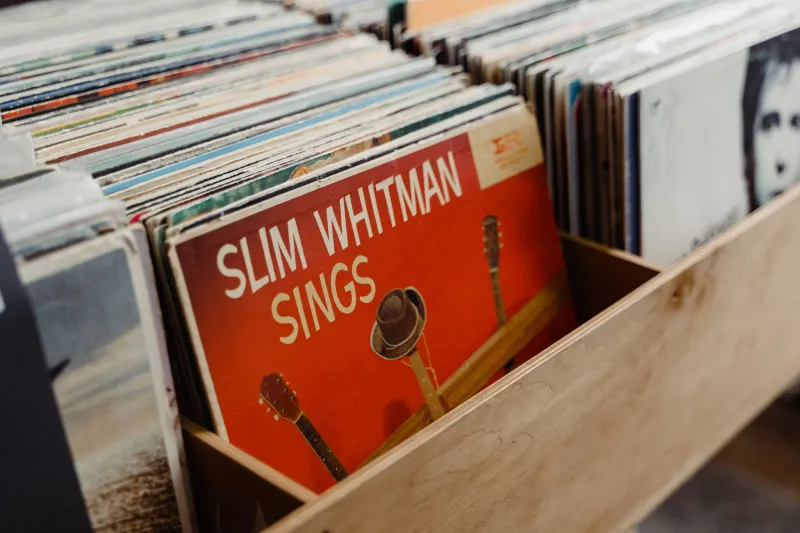
There's a woman in Portland who owns every issue of a noise-punk zine that ran for eleven issues between 1994 and 1997. The zine never had a name that anyone could agree on — depending on which issue you picked up, it was either Throat Punch Quarterly or just a symbol that couldn't be typed on a standard keyboard. She found the first copy at a record swap in 2003, paid fifty cents for it, and spent the next eight years tracking down the rest. She's not a curator. She doesn't have a grant. She has a spreadsheet, a flatbed scanner, and an obsession that she describes, without any apparent irony, as "a calling."
This is what preservation looks like when institutions aren't watching.
The Archive Nobody Asked For (But Everybody Needs)
When we talk about cultural memory, we tend to picture the big rooms — the Smithsonian, the Library of Congress, the MoMA vault. But those rooms have intake processes, acquisition committees, and a very particular idea of what counts as worth keeping. Experimental film from a queer collective in Atlanta in the early 2000s? Probably not making the cut. Hand-printed show posters from a DIY venue in Albuquerque that closed in 2009? Not exactly a priority.
That's where the collectors come in.
Across the country, there's a loose, largely unconnected network of people who are doing the slow, unglamorous work of keeping underground culture from disappearing. They're buying boxes of records at estate sales. They're digitizing cassette demos from bands that never left their zip code. They're storing hand-sewn chapbooks in acid-free sleeves and uploading scans to folders that they share with maybe forty people.
They're not doing it for clout. Most of them aren't even doing it for community, though community tends to find them anyway. They're doing it because something in them recognizes that if they don't, nobody will.
What Gets Lost When Nobody's Keeping Score
Here's the thing about underground art movements: they tend to leave very little behind. That's partly by design. A lot of the artists who made the most interesting work in the margins weren't thinking about legacy — they were thinking about the next show, the next issue, the next rent payment. Documentation was an afterthought, if it happened at all.
And then people move, venues close, hard drives fail, and the whole thing just... evaporates.
Researchers who study subcultures will tell you that the most significant gaps in cultural history aren't in the mainstream. We have plenty of documentation of what was popular. The gaps are in the weird stuff — the regional scenes, the micro-movements, the art that was too specific or too strange or too political to get picked up by anyone with a budget.
That's exactly what DIY collectors tend to gravitate toward. Not because it's obscure for obscurity's sake, but because that's where the most alive, most urgent, most genuinely human work tends to live.
The Methodology of the Obsessed
Ask a serious collector how they organize their archive and you'll get a wildly different answer every time. Some are meticulous — color-coded systems, custom databases, detailed provenance notes on every item. Others operate on a logic that looks like chaos from the outside but makes complete internal sense to them. Both approaches, somehow, work.
What they share is intention. These aren't people who just accumulate stuff. They're making curatorial decisions constantly — what to seek out, what to pass on, how to contextualize what they have. In that sense, what they're building isn't just a collection. It's an argument. A point of view about what mattered and why.
That's actually closer to what a good museum does than most museums would probably want to admit.
Some collectors have started thinking more deliberately about accessibility — digitizing materials, building simple websites, connecting with academic researchers who are finally starting to take underground culture seriously as a field of study. A few have partnered with university libraries willing to house physical materials under a kind of informal stewardship arrangement. Others are more protective, worried that institutional frameworks will flatten the context that makes their collections meaningful in the first place.
It's a real tension. And it doesn't have an easy answer.
The Collector as Cultural Theorist
Spend enough time talking to these people and you start to realize something: the best collectors aren't just preserving culture. They're actively interpreting it. The act of deciding what belongs together, what story a collection tells, what gets a label and what gets left mysterious — that's intellectual work. It's critical work.
One collector in Chicago who focuses on experimental Black film from the 1980s and 90s puts it this way: the collection isn't just about the films. It's about proving that this conversation was happening, that these artists were in dialogue with each other and with the broader culture, that this wasn't a footnote. The collection makes an argument that the mainstream record couldn't be bothered to make.
That kind of curation — rooted in love, fueled by obsession, driven by a conviction that the official story is incomplete — is doing something that institutions structurally struggle to do. It's personal. It has a perspective. It cares.
Why This Matters Right Now
We're living through a moment when a staggering amount of cultural production is happening simultaneously, and an equally staggering amount of it is disappearing before anyone can take stock of it. Digital platforms that hosted entire creative communities have shut down or pivoted, taking years of work with them. Physical spaces are closing. Independent publishers are folding.
The collectors and archivists doing this work aren't naive about the stakes. They know they can't save everything. But they're also not waiting around for permission to save what they can.
There's something quietly radical about that. In a culture that tends to reward scale and visibility, choosing to obsessively document the small and the overlooked is its own kind of statement. It says: this mattered. These people made something real. The fact that it didn't get a review in a major publication doesn't mean it didn't happen.
Future researchers — and future artists, and future communities looking for their own roots — are going to need these archives. They're going to need the people who cared enough to keep the boxes.
Somewhere in Portland, a woman is scanning her eleventh issue of a zine with no agreed-upon name. The work continues.