Together Alone: The Artists Who Create Best When Nobody's Watching (But Everyone's Around)
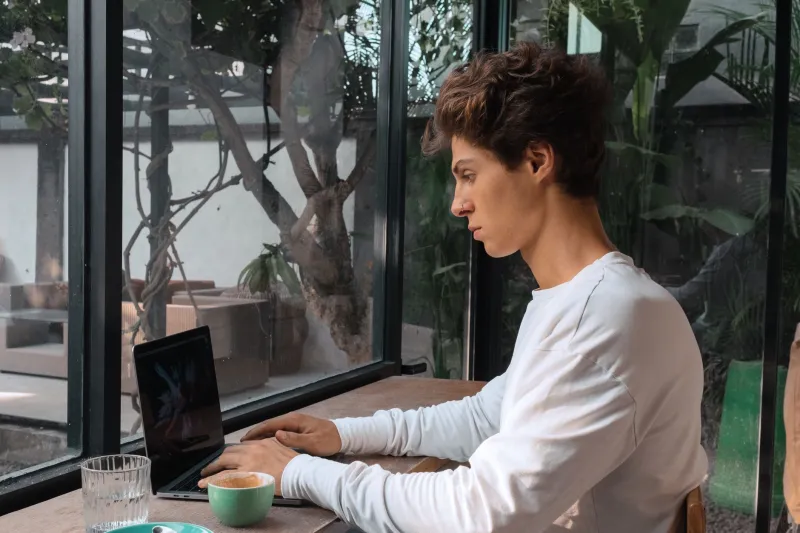
There's a particular kind of afternoon that creative people talk about in hushed, almost reverent tones. You're at a corner table. Someone nearby is typing furiously. A painter across the room is squinting at a canvas. Nobody's talking to you. Nobody needs anything from you. And somehow, you've just done the best three hours of work in recent memory.
This isn't an accident. And it's not a quirk. For a growing number of artists, writers, musicians, and makers across the US, it's a deliberate practice — one that's quietly reshaping how creative work gets done and how creative communities actually form.
Call it the solitude-in-company effect. Or, if you want the slightly more academic term floating around certain studio circles: co-presence without co-dependence.
The Problem With Being Alone (And With Not Being Alone)
Here's the trap most creative people know too well: pure isolation is brutal. The home studio, the spare bedroom, the apartment desk — these spaces are full of ghosts. Laundry that needs doing. Feeds that need scrolling. The particular silence that starts to feel less like peace and more like pressure.
But formal collaboration has its own tax. The check-ins, the compromises, the creative egos (your own included) that need managing. Anyone who's tried to co-write a song or co-author a piece knows the overhead is real. Sometimes the work gets better. Often it just gets slower.
What artists are increasingly gravitating toward is a third option — one that doesn't really have a clean name yet. You show up somewhere. Other people are working. You work too. Nobody owes each other anything. And yet something happens in that room that wouldn't happen if you were home alone.
The Science Has a Word for It (Artists Don't Care)
Researchers call it "body doubling" — the phenomenon where the mere presence of another person engaged in their own focused task helps regulate your attention and motivation. It's been studied in the context of ADHD, but creative workers have been stumbling onto it intuitively for decades. Coffee shops built entire economies on this accidental discovery.
But the artists doing this intentionally aren't really thinking about dopamine regulation. They're thinking about energy. "There's a frequency in the room when people are genuinely working," says one Brooklyn-based illustrator who spends three mornings a week at a shared studio in Bushwick where she rents no desk and has no formal membership — she just shows up and people know her. "I can feel when someone nearby is actually in it. And it pulls me in too."
That contagion of focus is hard to manufacture at home. It's also hard to find in a traditional collaborative setup, where the focus is constantly interrupted by the collaboration itself.
The New Residency Model (Minus the Application)
Artist residencies have long offered a version of this — a cohort of people doing their own work in shared physical space. But residencies come with gatekeeping, applications, timelines, and the social dynamics of a temporary community that knows it's temporary.
What's emerging now is more informal and more durable. Co-working spaces with dedicated creative memberships. Library study rooms that have quietly become de facto artist studios in cities like Chicago, Portland, and Austin. Independent bookshops with back rooms that function as semi-public work salons. Even certain coffee shops that have developed unspoken cultures of serious, sustained work — the kind where nobody feels weird sitting for four hours.
The Bonsonno spirit lives in exactly these spaces. Not the polished, Instagram-ready creative hub with the neon sign and the branded oat milk. The unglamorous room where real work happens because the conditions are just right and nobody's trying to make it a moment.
Unexpected Networks, Zero Networking
Here's the paradox that makes this trend genuinely interesting: the people who swear by working alone in public often end up building some of their most meaningful creative relationships through it. Not because they set out to network. Precisely because they didn't.
You see someone's sketchbook over three weeks. You notice the music producer who's always there on Tuesday afternoons. You catch a glimpse of a manuscript page and recognize something in the handwriting. Eventually — maybe after months — you say something. Or you don't, and the silent acknowledgment becomes its own kind of bond.
"I've gotten two of my best collaborators from a co-working space in Silver Lake," says a Los Angeles-based documentary filmmaker. "But I never would have approached either of them at a networking event. We worked next to each other for like six weeks before we even knew what the other person did. By the time we talked, we already trusted each other somehow."
That slow-burn trust is the thing formal networking can't replicate. It's earned through witnessed effort, not exchanged business cards.
What This Means for Creative Community
The implications here go beyond individual productivity habits. They point toward a different model of what creative community can look like — one built on shared presence rather than shared projects, on ambient belonging rather than formal membership.
This matters especially in a cultural moment when so much community-building has migrated online, where every connection comes with a performance requirement. The follow, the reply, the post that proves you exist. Shared physical space offers the radical alternative of just being somewhere together without producing anything for anyone else's consumption.
For artists who are exhausted by the visibility economy — the constant self-promotion, the platform maintenance, the algorithmic hustle — this is genuinely restorative. You're in a room. You're making something. Other people are making something. Nobody's filming it.
How to Find Your Room
If this resonates, the practical advice is almost embarrassingly simple: go somewhere people work, and work there. Consistently. The consistency is the key ingredient most people skip. The magic of these spaces isn't in a single afternoon — it's in becoming a recognizable presence, in being seen doing the work week after week until you're part of the unofficial community whether or not you've ever exchanged names.
Look for spaces where the culture already exists: independent libraries, arts-focused co-working spots, open studio days at local collectives, the back room of a record shop that tolerates laptops on slow afternoons. Ask around. These places are rarely advertised. They're found through word of mouth, which is exactly why they stay good.
The collaboration paradox turns out not to be a paradox at all. Sometimes the best thing you can do for your creative practice — and for the community around it — is show up, do your work, and let everything else happen on its own time.