Pay Me Directly: The Artists Who Ditched the System and Built Their Own Paychecks
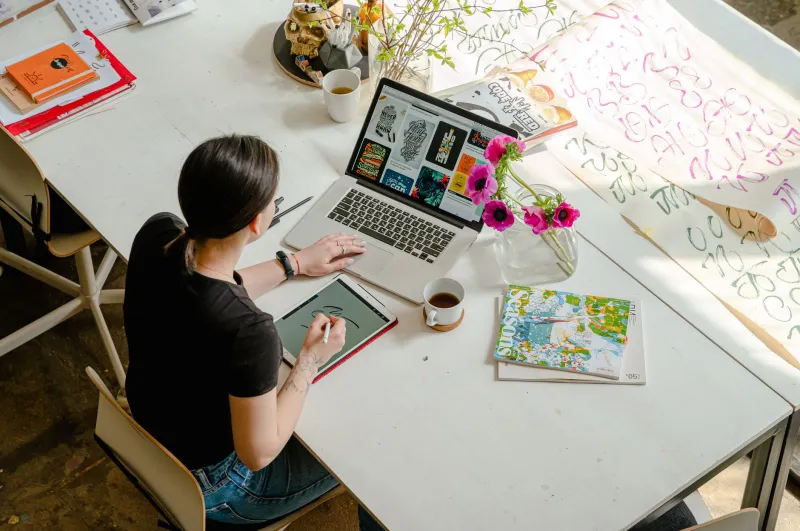
There's a fantasy a lot of us grew up with: the discovery story. A label scout catches your set at a tiny venue. An editor at a big magazine stumbles onto your blog. A gallery owner sees your work at a group show and hands you a solo exhibition. The right person, in the right room, at the right moment, changes everything.
That fantasy is getting replaced. Not by something shinier or more glamorous—but by something arguably more powerful: the monthly recurring payment.
Across the country, creators who once spent years chasing institutional approval are quietly building six-figure incomes by doing something almost embarrassingly simple. They're asking their fans to pay them directly, every month, for the work they were already making.
The Old Gatekeeping, Briefly Explained
For generations, the path to a sustainable creative life ran through somebody else's door. Musicians needed labels to press and distribute records. Writers needed publishers to get their books into stores. Visual artists needed galleries to legitimize their prices. Even independent creators often depended on platforms—YouTube ad revenue, Spotify streams—where the algorithm was the gatekeeper and the payout was a rounding error.
The problem was never really about talent. It was about access, leverage, and whose taste got to define value. A label could sign a hundred artists and drop ninety-eight of them. A publisher could love your manuscript and still pass because the sales team wasn't sure about the market. The system wasn't designed to support creative risk. It was designed to minimize financial risk for the people at the top.
What's changed is that creators no longer need those people to collect money.
What Direct Subscription Actually Looks Like
Platforms like Patreon, Substack, and Memberful aren't new—Patreon launched in 2013, Substack in 2017—but the culture around them has shifted dramatically. What started as a tip jar for YouTubers has evolved into a full-blown economic model that serious artists, musicians, writers, and educators are using to fund entire careers.
Here's how it typically works: a creator offers tiered access to their work in exchange for a monthly or annual fee. A musician might charge $5 a month for early access to recordings, $15 for a monthly voice memo about their creative process, and $50 for occasional live listening sessions. A writer might offer free posts to anyone but put their most considered long-form essays behind a $7/month paywall. A visual artist might share process videos, print discounts, and behind-the-scenes studio content for a flat fee.
The math, when it works, is striking. A creator with 1,000 paying subscribers at $10 a month is pulling in $10,000 monthly—$120,000 a year—before merchandise, live events, or commissions. That's not hypothetical. That's what's happening right now, for people you've probably never heard of, in niches ranging from experimental music to hand-lettering to regional food writing.
Case Studies Worth Paying Attention To
Take the example of independent musicians who've built sustainable careers through Patreon without ever landing a major label deal. Artists working in folk, ambient, and experimental genres—styles that commercial radio has always treated as unmarketable—are finding that a few thousand devoted listeners paying a small monthly fee outperforms the economics of streaming by a factor of dozens. One ambient composer based in the Pacific Northwest reportedly earns more from 800 Patreon subscribers than she ever did from millions of Spotify plays.
On the writing side, Substack has produced a wave of independent journalists and essayists who've walked away from staff positions at legacy publications to earn more money with more editorial freedom. A cultural critic in Chicago who left a mid-size magazine to write independently about race, music, and urban life now reaches a smaller but far more engaged audience—and earns significantly more than her previous salary. Her readers aren't just subscribers; they're stakeholders who show up to her live events and share her work with the kind of enthusiasm that no marketing budget can manufacture.
Visual artists are using Memberful to build what amount to private creative communities—spaces where collectors, fans, and fellow makers pay for proximity to the work and the working process. One illustrator in Brooklyn uses hers to fund personal projects that would never survive a traditional licensing pitch. The subscribers aren't buying a product. They're funding a practice, and they know it.
The Relationship Is the Revenue Model
What separates subscription income from passive income—or from the cold transaction of a one-time sale—is the relationship embedded in the model. When someone pays you $8 a month to follow your work, they're not just buying content. They're expressing ongoing trust. They're betting on you as a person, not just on a single piece of work.
That changes everything about how you create. Instead of chasing virality or trying to reverse-engineer what the algorithm wants, you're accountable to a specific group of people who showed up because they already like what you do. The pressure shifts from how do I get discovered to how do I keep being worth it. For a lot of creators, that's a more generative kind of pressure.
It also changes the power dynamic in a way that the old system never allowed. Your income isn't contingent on one label exec's opinion or one editor's bandwidth. It's distributed across hundreds or thousands of individual decisions, made by people who can leave whenever they want—which means you have to keep earning it, but you're never one bad meeting away from losing everything.
It's Not Magic, and It's Not for Everyone
Let's be honest: this model takes time to build, and it requires an audience before it can fund a career. You can't launch a Patreon into a void and expect it to replace a day job in six months. The creators who are making it work have almost always spent years building trust with an audience first—through free content, live performance, community involvement, or some combination of all three.
There's also a real labor dimension that's easy to underestimate. Running a subscription means showing up consistently, communicating with your supporters, and treating the relationship like the business it is. Some creators find that energizing. Others find it exhausting, especially when it starts to feel like customer service.
And the platforms themselves take a cut—Patreon's fees range from 5 to 12 percent depending on the tier, and payment processing adds more. Substack takes 10 percent of subscription revenue. These are real costs, though they pale in comparison to what a label, publisher, or gallery historically claimed.
What This Means for the Culture
At Bonsonno, we're interested in what happens when creative communities stop waiting for permission. The subscription rebellion isn't just an economic story—it's a cultural one. When artists can fund their own work directly through the people who love it, the work that gets made stops being filtered through a single industry's definition of commercial viability.
That means more weird music, more niche writing, more visual art that has nothing to do with what's selling at auction. It means a broader, stranger, more genuinely diverse creative culture—not because institutions decided to be more inclusive, but because the economic infrastructure that required their approval is quietly becoming optional.
The most radical thing a creator can do right now might just be sending an email that says: here's what I'm making, here's what it costs to support it, and here's where to sign up.
Simple. Direct. Yours.