Logged Off, Tuned In: The Quiet Revolution of Communities Built Without the Algorithm
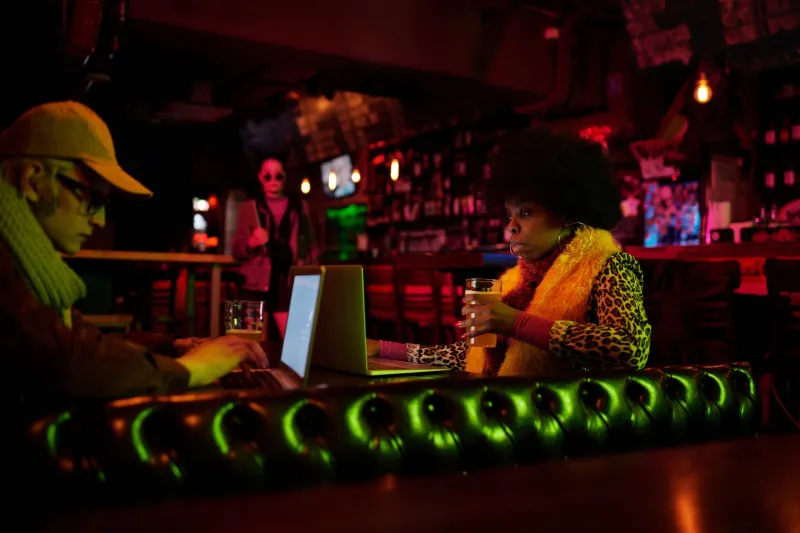
There's a Discord server for experimental ambient music that you can't Google your way into. You have to be referred by an existing member, answer three questions about your listening habits, and agree to a community charter that explicitly bans self-promotion. It has 187 members. It has produced three collaborative albums, a printed zine, and — according to its founding moderator, who goes by the handle Tuning Fork — "more genuine conversation about sound than I had in four years of music school."
This is the internet a lot of people stopped believing in. And somehow, quietly, it's still here.
The Feed Is Not Your Friend
By now, most of us have internalized the basic critique of algorithmic social media: it flattens nuance, rewards outrage, and turns creative people into content machines optimizing for engagement metrics they didn't ask for. But knowing the problem and actually building an alternative are two very different things.
What's interesting about the communities popping up across Discord, closed forums, Mastodon instances, and even old-school mailing lists is that they're not just retreating from mainstream platforms — they're doing something architecturally different. They're building friction into the experience on purpose.
Invite-only access. Small member caps. Slow onboarding. Moderators who actually read what you write. These design choices feel almost aggressively anti-growth, and that's entirely the point.
"When you can't go viral, you stop trying to," says one moderator of a visual arts forum based out of the Pacific Northwest. "People just start... talking. Like actually talking."
Small by Design
The communities doing this most intentionally tend to share a few structural quirks. First, they're small — often deliberately capped somewhere between 100 and 500 members. Second, they're slow. Conversations unfold over days or weeks rather than minutes. Third, they're specific. Not "art" as a category, but papercut printmaking or DIY synth repair or Black feminist speculative fiction.
That specificity turns out to matter enormously. When a space is built around a genuinely niche interest, the people who show up are already self-selected for depth of engagement. You don't end up with the ambient scroll of a general-interest platform. You end up with a room full of people who care about the same weird, specific thing you care about.
One Midwest-based online community for ceramic artists operating outside gallery systems — accessible only through a referral from another member — has become a genuine professional network, a critique space, and a resource-sharing hub. Members have co-bought kiln equipment, organized pop-up shows, and navigated the nightmare of arts grant applications together. None of that would have happened if the space had been open to everyone with a smartphone.
The Low-Tech Advantage
Some of the most vibrant digital underground spaces aren't running on sleek infrastructure at all. Mailing lists powered by tools like Substack's discussion features, or even old-school listservs, have seen a surprising resurgence. Several literary communities centered on small-press poetry have migrated entirely to email threads — partly out of nostalgia, partly out of genuine preference for a medium that doesn't notify you every thirty seconds.
There's something almost philosophical about the choice to go low-tech. It signals a certain kind of seriousness. It says: this isn't optimized for your attention span. If you want to be here, you have to actually be here.
The trade-off, of course, is reach. These spaces will never trend. They won't attract brand partnerships or speaking invitations or the other downstream rewards that mainstream platform visibility can generate. For a lot of their members, that's not a bug — it's the whole reason the thing works.
Culture Made in the Margins
What's actually coming out of these spaces is worth paying attention to. Independent music compilations. Self-published chapbooks. Collaborative visual projects that move between online curation and physical installation. Subculture-specific criticism that's sharper and more specific than anything you'd find on a general-interest culture site.
Because these communities aren't chasing clicks, the creative output tends to be weirder, more personal, and less obviously market-shaped. A collective of illustrators working through a closed Slack channel recently produced a limited-run art book that sold out in 48 hours — not because of a promotional campaign, but because the 300 people in their orbit trusted the work completely. That trust was built over years of low-key, consistent engagement. No algorithm required.
The Real Cost of Opting Out
It would be naive not to acknowledge the downsides. These spaces can become insular. Without active effort, they can default to homogeneity — the same kinds of people, the same points of reference, the same blind spots. The invite-only model, while protective, can also calcify into gatekeeping. Several community founders we spoke with identified this as their central ongoing challenge: how do you stay small and intentional without becoming a club?
There's also the question of sustainability. Volunteer-run digital spaces depend heavily on a few dedicated people who are doing a lot of invisible labor. When those people burn out — and they do — communities can collapse overnight.
But for many of the people building and inhabiting these spaces, these are problems worth wrestling with. They're the problems of something real, something that belongs to the people in it. That's a different set of problems than the ones you get when you hand your community over to a platform whose interests are fundamentally not yours.
What This Means for Culture
There's a version of this story that's purely nostalgic — a longing for the early internet, for message boards and IRC channels and the feeling that you'd found your people in a place most of the world hadn't found yet. And sure, some of that energy is in the mix.
But the communities thriving right now in the digital margins aren't just recreating the past. They're making a deliberate argument about how culture gets made. They're betting that meaning requires limitation. That belonging requires some form of commitment. That the best creative work happens in rooms where not everyone is welcome — not out of elitism, but out of care.
The algorithm isn't going anywhere. But neither are the people who've decided they'd rather build something slower, stranger, and more theirs. Log off long enough, and you might just find them.