Nobody Gave Them the Title, But They're Doing the Work: The Everyday Curators Reshaping American Culture
Somewhere in Columbus, Ohio, a middle school art teacher named Dani spends her Sunday mornings photographing handmade signs in laundromat windows and posting them to an Instagram account with 40,000 followers. She doesn't call herself a curator. She calls it "a thing she does." But ask anyone who follows her, and they'll tell you her eye is sharper than half the galleries in town.
This is the quiet revolution happening across American culture right now — and it's being led by people who never asked for the title.
The Word Nobody Wants to Use for Themselves
There's a reason "curation" still sounds a little stiff, a little stuffy, a little like it belongs in a press release from an institution with marble floors. The word carries baggage — art school degrees, white-glove openings, the implicit suggestion that someone with credentials decided what was worth your attention.
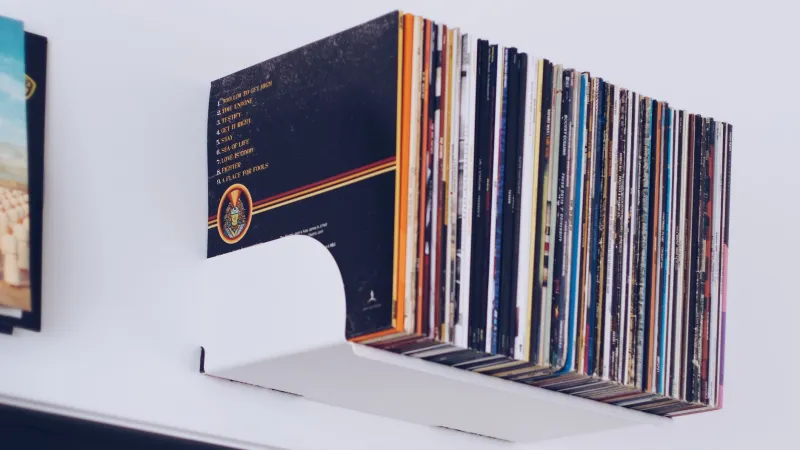
But the actual practice of curation? That's happening everywhere, all the time, by people who would laugh if you called them curators. The guy in Portland who's been building a Google Doc of underrated regional horror films since 2017. The woman in Atlanta who hand-selects every track on a Spotify playlist she's been growing for five years, with 12,000 followers who trust her taste completely. The retired postal worker in Albuquerque who photographs murals from every neighborhood he walks through and prints them in a self-published zine he gives away for free.
They're gathering things. Organizing them. Sharing them with intention. That's curation. They're just doing it without asking anyone's permission first.
What Changed, and When
The tools changed everything. That's the obvious answer, but it's still the right one. When the cost of sharing dropped to zero and the friction of publishing disappeared, the gatekeeping function that institutions used to own became largely obsolete. You no longer needed a gallery to show work, a label to release music, or a magazine to share your taste. You just needed a phone and a point of view.
But access alone doesn't explain why some of these informal curators have built audiences that rival — and sometimes dwarf — their institutional counterparts. A museum's Instagram account might have a big following because the museum is famous. A stranger's playlist hits different because they earned it, one recommendation at a time, by being right enough, often enough, that people started trusting them.
That trust is the actual currency here. And it turns out credentials have very little to do with whether you earn it.
Expertise Without the Paper
Here's what the traditional culture industry has been slow to admit: genuine expertise doesn't require institutional validation. It requires time, obsession, and the willingness to be wrong in public.
The people building these informal archives and collections have usually been doing it for years before anyone noticed. They developed their eye or their ear through sheer accumulated hours — watching, listening, reading, comparing, arguing about things with friends at 2am. That's not so different from how plenty of formally trained curators developed their taste. The difference is just whether someone handed them a certificate at the end.
What informal curators often have that institutions don't is proximity. They're embedded in the communities they're documenting. The person running a Tumblr dedicated to Black Southern foodways isn't observing that culture from a distance — they grew up in it. The guy cataloging Detroit techno's lesser-known second wave isn't doing archival research — he was there. That closeness produces a kind of knowledge that no degree program can manufacture.
The Playlist Is a Manifesto
It's worth taking the playlist seriously for a second, because it's one of the most underrated curatorial forms of the last decade. A great playlist isn't just a list of songs you like. It's an argument. It makes claims about what belongs next to what, about which eras rhyme with each other, about what a mood actually feels like when it's rendered in sound.
The people who are genuinely good at this — and there are more of them than you'd think — are practicing a kind of editorial judgment that's not entirely different from what a music programmer at a radio station or a compiler of a critical anthology does. They're just doing it without the infrastructure, and often without the ego.
Spotify and Apple Music have both built algorithmic tools that try to replicate this. They're fine. They're also completely soulless compared to following a real person whose taste you've learned to trust. The algorithm knows what you listened to last week. Your favorite playlist-maker knows what you need to hear next.
When the Community Becomes the Collection
Some of the most interesting informal curation happening right now isn't happening on platforms at all — it's happening in group chats, Discord servers, and neighborhood newsletters. Small, closed communities where people share things they've found, filtered through a shared sensibility.
These spaces function like living collections. The things that get shared and celebrated become, over time, a portrait of what that community values. Someone's always playing the informal role of editor — nudging the conversation, surfacing the good stuff, gently redirecting when things drift. They're rarely acknowledged for it. But without them, the whole thing falls apart.
That invisible editorial labor is real work, and it shapes culture in ways that are hard to measure but easy to feel.
Why This Matters Beyond the Vibe
This isn't just a feel-good story about democratization. There are real stakes here. What gets preserved, shared, and celebrated determines what future generations know about right now. If the only things that make it into the official record are the things that passed through institutional filters — the galleries, the labels, the magazines — then huge swaths of American cultural life disappear.
The informal curators are filling that gap. Not always consciously, not always systematically, but consistently. They're keeping things alive that would otherwise get lost. And they're doing it because they care, not because anyone's paying them.
At Bonsonno, we've always believed that culture doesn't live in buildings — it lives in people. In the choices they make about what to pay attention to, what to pass along, what to keep. The everyday curators out there, the ones who'd roll their eyes at the label, are proof that those choices add up to something real.
You don't need a title to do the work. You just need to start.