Half-Built and Honest: The Artists Who Never Finished and Don't Plan To
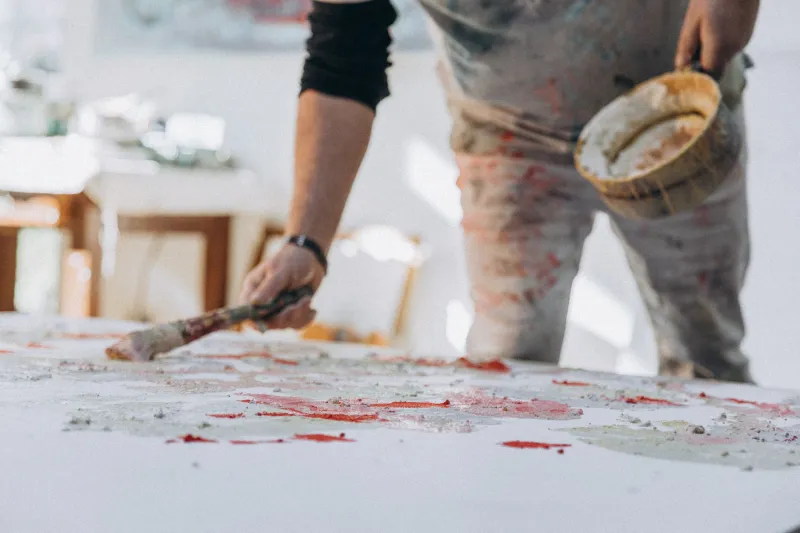
Somewhere in a storage unit in Albuquerque, there's a half-painted mural canvas that a muralist named Drea has been hauling around for six years. She's moved it through three apartments and two cities. She's never added another brushstroke. She's also never thrown it out.
"People always ask me when I'm going to finish it," she says. "And I keep thinking — finish it into what, exactly?"
That question is becoming less rhetorical and more of a genuine artistic stance. Across studios, spare bedrooms, and shared maker spaces all over the country, a loose but recognizable movement is taking shape around the idea that the unfinished project isn't a failure. It might actually be the most truthful thing a creative person can make.
The Pressure to Ship Is Real — and It's Doing Damage
We live in a culture that is absolutely obsessed with the completed arc. Launch the thing. Drop the album. Publish the piece. Post the final version. The language of creative work has been so thoroughly colonized by startup and tech culture that even painters talk about "shipping" their work. The implicit message is that anything sitting in a drawer, a folder, or a half-finished state is wasted potential — a problem to be solved.
But a lot of artists will tell you that pressure has a body count. Not literally, but creatively. The insistence on completion, on polish, on a product that's ready for public consumption, has a way of killing the very instinct that got the work started in the first place.
There's a word that keeps coming up in these conversations: perfectionism. Not the healthy, standards-driven kind that pushes craft forward, but the paralytic kind — the voice that says if it's not done right, it shouldn't be done at all. For a lot of creators, leaving something unfinished isn't avoidance. It's the only way to stay honest about what the work actually was at the moment it mattered most.
Fragments as Documentation
Here's a reframe that's been floating around creative communities lately: what if an unfinished piece isn't a failed artwork, but a successful document?
Think about it. A half-written song captures the exact emotional temperature of the afternoon it was started. A sketch that never became a painting holds the initial impulse — raw, unmediated, before the artist's internal editor showed up and started making executive decisions. A chapter abandoned mid-paragraph might be the truest thing a writer ever put down, precisely because it hasn't been smoothed into something presentable.
There's a long art-historical tradition here that we tend to overlook. Rodin left surfaces rough on purpose. Michelangelo's Prisoners sculptures emerge from unfinished marble like they're still being born — and art historians have argued for centuries that the incompleteness is the point. Schubert's Unfinished Symphony is one of the most performed pieces in the classical canon. The gap isn't a flaw. It's load-bearing.
Contemporary artists are picking up that thread and running with it in ways that feel distinctly right now.
Making Space for the Audience to Step In
One of the more interesting arguments for leaving things incomplete is what it does to the relationship between creator and audience. A finished work, especially a highly polished one, has a kind of closed-door quality. It says: this is what it is, now receive it. An unfinished work does something different. It leaves the door open.
Some artists are leaning into this deliberately. There are painters who exhibit works-in-progress and invite gallery visitors to add to them. Musicians who release stems and fragments specifically so fans can build on top. Writers who publish first drafts with all the crossed-out lines still visible, the margin notes intact, the uncertainty on full display.
This isn't just a gimmick. It's a fundamentally different theory of what art is for. When the work isn't complete, the audience isn't just a receiver — they become a collaborator, even if only in their imagination. They fill in the silence. They finish the sentence in their own head. The work becomes partly theirs, which is, if you think about it, a more honest description of how all art actually works anyway.
The Anxiety Is Part of It
Let's not romanticize this too hard. Leaving things unfinished can also just be avoidance dressed up in philosophy. Some of those half-built projects in storage units are there because their creators are scared — scared of judgment, scared of failure, scared of what it means if they pour everything into something and it doesn't land.
The artists who seem to be doing this most intentionally are the ones who can tell the difference. They know which projects are unfinished because they're done with them and which ones are unfinished because they're not ready to find out what happens next. Both are valid. But only one of them is a creative choice.
Drea, back in Albuquerque, puts it plainly: "That canvas represents a version of me that doesn't exist anymore. If I finished it now, I'd be lying about who made it."
That's not avoidance. That's archival thinking. She's preserving something true by not touching it.
What It Means to Let Go Without Finishing
There's a particular kind of peace that some creators describe when they formally decide a project is done — not completed, but done. Done being worked on. Done being worried about. Released into whatever it is.
It's different from giving up, though it can look the same from the outside. Giving up implies the goal was always completion. But if the goal shifts — if the point of the work was the making, the learning, the emotional processing, the afternoon you spent in a state of genuine creative aliveness — then stopping doesn't mean failing. It means you got what you came for.
That's a hard sell in a culture that wants the finished thing, the shareable thing, the thing with a title and a release date. But more and more creators seem willing to make that argument anyway, quietly and without much fanfare.
Which, honestly, feels about right. The best stuff usually doesn't announce itself.
Got a project you've been "almost done with" for three years? You might be onto something. Find the Bonsonno community at bonsonno.org.