Nobody Meant to Become the Keeper: The Accidental Archivists Rewriting What Gets Remembered
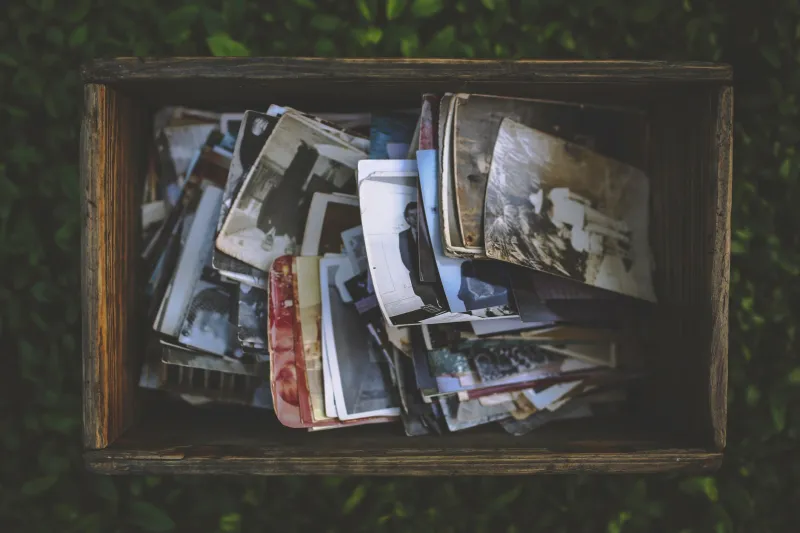
Marcia Delgado didn't plan on spending her forties cataloguing hundreds of handwritten flyers from a defunct Puerto Rican social club in Chicago's Pilsen neighborhood. She was cleaning out her late aunt's storage unit when she found them — rubber-banded, water-stained, and absolutely irreplaceable. "I kept thinking, somebody should deal with these," she says. "And then I realized I was somebody."
That moment of reluctant reckoning is one a surprising number of people know intimately. Across the country, a loose, largely unconnected network of accidental archivists is doing work that libraries underfund and universities ignore — not because they sought it out, but because the work found them first.
The Box You Can't Throw Away
For a lot of these people, it starts with an object. A box of 8mm home movies at an estate sale. A crate of records from a shuttered Black-owned radio station. A grocery bag of photographs left behind after a beloved community center closes. The institutional world has a name for this kind of material: ephemera. Which is a polite way of saying stuff nobody officially decided to care about yet.
But the accidental archivist sees something different. They see a gap — the space between what official history captures and what actually happened to real people in real places. And once you see it, you can't really unsee it.
Robert Tran started digitizing old Vietnamese-American community newsletters from Orange County, California, after finding a stack at his parents' house during the pandemic. He had no archival training, no institutional affiliation, just a flatbed scanner and a lot of time. What began as a quarantine project has grown into a searchable online archive with thousands of documents spanning nearly four decades of an immigrant community's internal life — debates about local politics, announcements for cultural festivals, classified ads in two languages.
"These newsletters were how people communicated before Facebook, before email," he says. "They contain a whole world. And nobody was keeping them."
When Passion Outpaces Infrastructure
Here's the thing about accidental archivists: they're often extraordinarily good at the instinctive parts of the work — recognizing what matters, building trust with communities, knowing why something is worth saving. What they're frequently unprepared for is everything else.
The logistics alone can be staggering. Climate-controlled storage costs money. Digitization equipment costs money. The metadata standards that make a collection actually searchable take years to learn. And then there's the legal stuff: copyright, right of publicity, tribal sovereignty issues for Indigenous materials, HIPAA concerns if anything touches medical records. Nobody hands you a manual when you inherit a hundred boxes of someone else's life.
Delgado spent two years figuring out who technically owned the flyers she found before she felt comfortable sharing them publicly. "I was terrified of doing it wrong," she says. "These were people's stories. Some of them were still alive."
That ethical weight is something accidental archivists talk about constantly — the sense that you're holding something that doesn't fully belong to you, even if you're the one keeping it safe. It's a kind of stewardship that professional institutions are sometimes better at codifying but not always better at feeling.
The Gatekeeping Question
There's a tension that runs through all of this, and it's worth naming directly: when someone outside the credentialed world decides what gets preserved and how it gets framed, they're making editorial choices. Every archivist does. The difference is that professional archivists operate within systems designed to surface and scrutinize those choices. Accidental archivists often don't.
That's a real vulnerability. But it's also — and this is the part that doesn't get said enough — sometimes a feature, not a bug.
Institutional archives have their own blind spots, their own politics, their own histories of deciding that certain communities' records were less worth keeping. The National Archives holds the papers of presidents. It does not hold the meeting minutes from your grandmother's tenants' union. Somebody has to.
And the people who end up doing that work are often members of the communities whose stories are at stake. Tran isn't an outside researcher extracting material from a Vietnamese-American community for academic purposes. He's in it. That proximity shapes what he notices, what he asks about, what he thinks is worth a second look.
"I know what these abbreviations mean because my parents used them," he says. "I know which community leader was controversial and why. A researcher coming in cold might miss all of that."
The Emotional Labor Nobody Warns You About
Spend enough time talking to accidental archivists and a theme emerges that has nothing to do with metadata or storage formats: grief.
You are, by definition, working with things that have been lost or nearly lost. The community that made these flyers is gone. The radio station is silent. The people in the photographs are dead or scattered. Sitting with that, day after day, takes something out of you.
Delgado describes it as a kind of low-grade mourning that never fully lifts. "You're happy the stuff exists. You're glad you found it. And you're also just... sad, all the time, about what didn't survive."
Some accidental archivists burn out. Others find that the work becomes a form of meaning-making that's hard to replicate anywhere else. They're not just preserving the past — they're actively arguing, through their labor, that these particular people and places deserved to be remembered. That's a profound thing to do with your time, even if you stumbled into it.
Finding Your People
One of the more hopeful developments in this space is that accidental archivists are increasingly finding each other. Online communities, regional meetups, informal mentorship networks — the infrastructure for self-taught preservation work is slowly getting built by the people who need it.
Organizations like the Shift Project and various regional oral history associations have started offering resources specifically aimed at community-based archivists without formal training. Some universities have begun creating accessible workshops on digitization and metadata for exactly this audience. It's not enough, but it's something.
And within those networks, there's a real culture developing — one that values community accountability over institutional prestige, that treats the people whose stories are being preserved as collaborators rather than subjects, that's honest about the limits and the costs of this kind of work.
Marcia Delgado's flyers are now housed in a shared digital space she built with a small grant from a local arts foundation. She's been contacted by three people who recognized relatives in the photographs. One of them cried on the phone.
"She said, 'I didn't know anyone kept this,'" Delgado recalls. "And I almost said, 'Neither did I.' But I didn't. Because it felt like the wrong answer."
She pauses. "I think I kept it because it needed to be kept. That's the whole story, really. That's all any of us are doing."