Ghosts in the Glove Compartment: The Ordinary People Rescuing Stories That Almost Disappeared
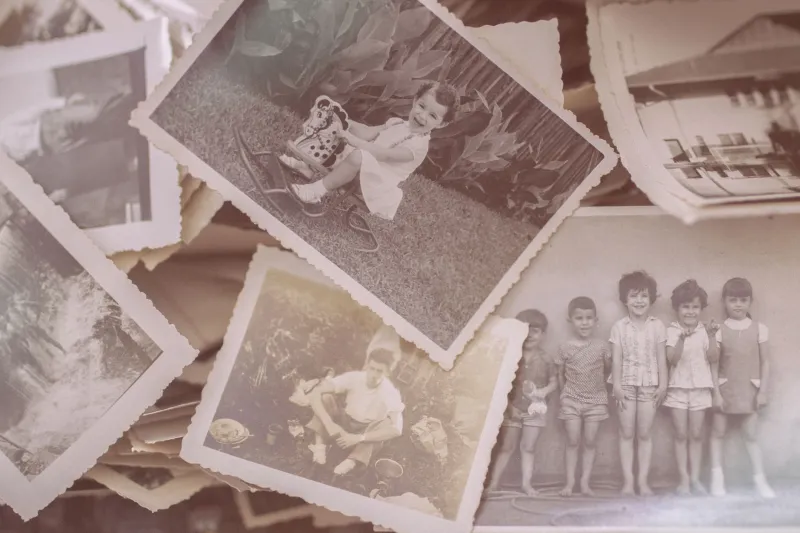
There's a voicemail on Deja Okafor's phone that's four years old. Her grandmother's voice, a little scratchy from the bad connection, asking if Deja remembered to eat. She's never deleted it. She's also never really talked about it — until recently, when she started building what she calls a "memory archive" out of it, alongside a stack of faded Polaroids, a church bulletin from 1987, and a handwritten list of nicknames her grandmother used for everyone in the family.
"None of it would make sense to anyone else," Deja says. "But together it tells you everything about who she was."
Deja isn't a historian. She works in logistics in Atlanta. But she's part of a quietly growing movement of people who are doing something that formal institutions have largely refused to do: preserving the cultural lives of ordinary families, in all their fragmented, non-linear, deeply human messiness.
What the Archives Left Out
Here's the uncomfortable truth about official memory-keeping: it has always been selective. Museums collect what's considered significant. Libraries archive what's considered legible. The stories that get preserved tend to belong to people with the power, resources, or documentation to demand preservation.
Everybody else? Their histories live in shoeboxes under beds. In the back of glove compartments. In the muscle memory of a dish nobody wrote down. In the particular way a grandmother hummed when she was worried.
Those stories are disappearing at an accelerating rate — not because people don't care, but because there was never a system built to catch them. And so a loose, informal network of personal archivists has started building that system themselves, one voicemail, one recipe, one overheard conversation at a time.
The Materials Nobody Else Wants
Ask someone in this community what they work with and the list gets interesting fast. Old voicemails, obviously. But also: grocery lists in a dead relative's handwriting. Photographs with no names on the back. Ticket stubs. Mixtapes on cassette. The specific slang a neighborhood used in the nineties that's already half-gone. The way certain families said goodbye at the door — the ritual of it, the choreography.
Marcos Villanueva, a graphic designer in San Antonio, spent two years reconstructing his great-uncle's immigration story using a combination of hand-drawn maps, scanned letters in Spanish, and interviews with cousins who each remembered different fragments.
"My great-uncle never talked about it directly," Marcos explains. "But everyone had a piece. One cousin knew the town he came from. Another remembered a story about the border. My mom had a photograph. I just became the person who put it all in one place."
That's the role these personal archivists keep describing: not the storyteller, exactly, but the assembler. The one who noticed that the pieces existed and decided they were worth connecting.
Why Now?
Some of it is generational grief — a lot of people lost elders during the pandemic before they could ask the questions they'd been putting off. Some of it is the rise of tools that make this work more accessible: cheap scanning apps, free cloud storage, audio recording software that fits in your pocket.
But there's also something cultural happening. A growing skepticism toward official narratives. A hunger for stories that feel real rather than curated. An instinct, especially among younger Americans, that the things worth preserving might not be the things that got preserved.
"I think a lot of us grew up feeling like our families' lives weren't history," says Toni Marchand, who runs a small community workshop in New Orleans where neighbors bring in objects and documents to be digitized and catalogued. "Like history was something that happened to other people, in other places. And we're just collectively deciding that's not true."
Toni's workshop, which she started out of her living room, now serves dozens of families a month. She has no institutional backing. She bought her first scanner with birthday money.
The Methodology of the Intimate
What makes this form of archiving distinct isn't just the materials — it's the interpretive framework. Official history asks: what happened? Personal archivists are asking something stranger and more interesting: what did it feel like? What got passed down without anyone noticing? What are the invisible rules a family lived by?
That means the methodology gets creative. Some people conduct formal oral history interviews with relatives. Others take a more ambient approach — recording family dinners, transcribing overheard phone calls (with permission), photographing the insides of junk drawers. One woman in Chicago told us she spent six months documenting every meal her mother cooked, not just the recipes but the whole context: what she said while she cooked, who she was cooking for, what memories came up.
"Food is the most honest archive," she said. "People will tell you things over a stove that they'd never say sitting down."
The Question of Who It's For
Here's where it gets philosophically interesting: most of these archives aren't public. They're not meant to be. They're built for a family, a neighborhood, a small circle of people who share the context to understand them.
And yet, something about them feels urgently relevant to everyone. Maybe because they model a different relationship to cultural value — one where significance isn't determined by scale or visibility, but by depth and specificity. The story of one grandmother's particular way of saying goodbye is not a universal story. But it points toward something universal: the terror of forgetting, and the stubborn human impulse to push back against it.
Deja still hasn't deleted that voicemail. She's also recorded herself explaining what it means, so that someday someone else will know why she kept it.
"I want whoever finds this stuff after I'm gone to understand," she says. "Not just what happened. But why it mattered."
That's the whole project, really. Not history in the grand sense — but history in the true sense. The kind that lives in a voicemail. The kind that almost didn't make it.